Swim Development Milestones: What Skills Do Children Typically Learn?
From blowing bubbles at 24 months to swimming laps at 10 — here\'s a practical guide to what swimming skills your child should be developing at every stage.
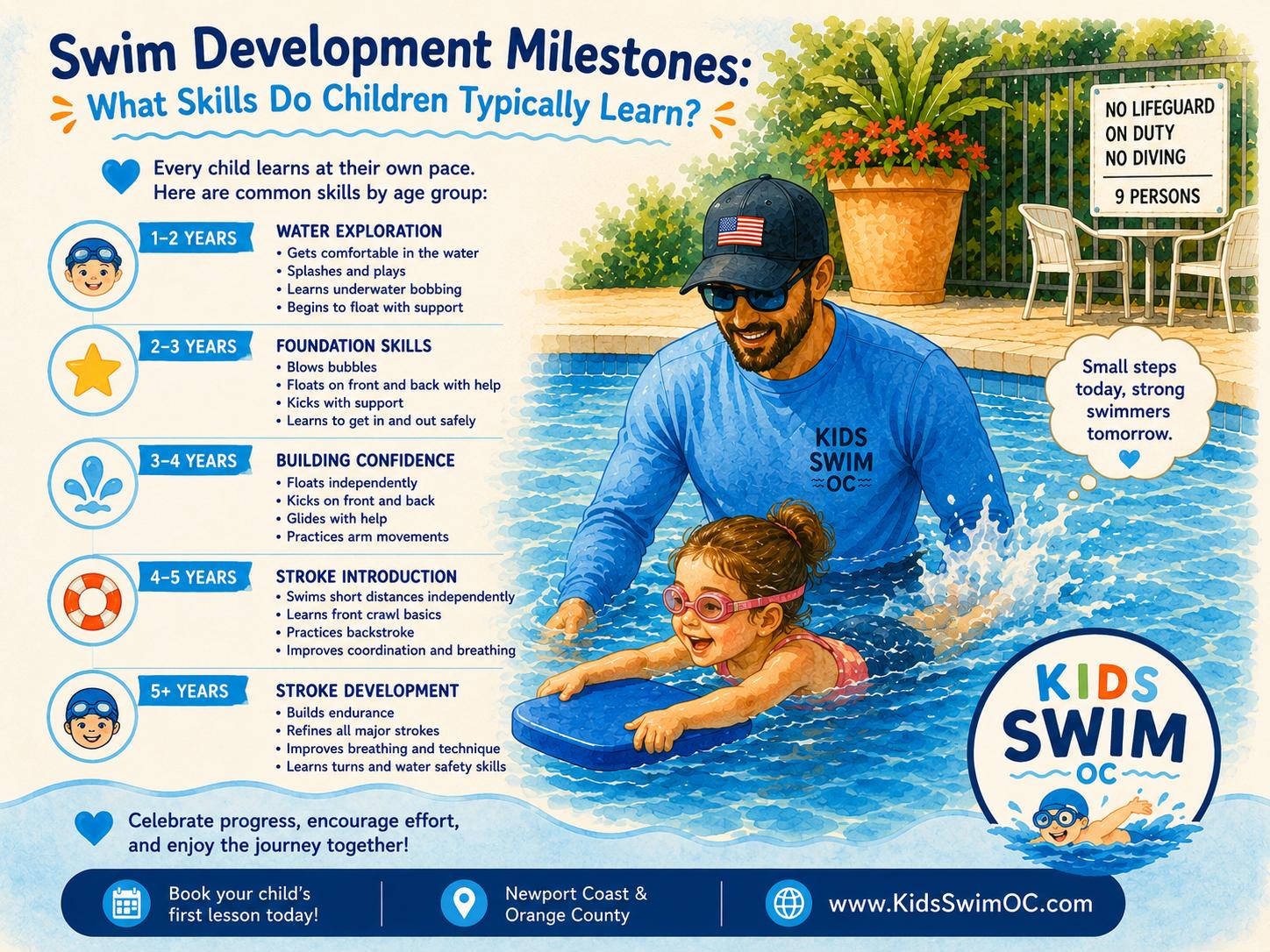
Every child learns to swim at their own pace. Some children become confident in the water quickly, while others need more time—and that's perfectly normal.
The milestones below are intended as a general guide to help parents understand how swimming skills often develop. They're not strict age requirements, and every child's journey is unique.
Ages 24 Months – 3 Years: Building Water Confidence
At this stage, the focus is on creating a positive relationship with the water rather than learning formal swimming techniques.
Children often begin to:
- Feel comfortable entering the water with a trusted adult.
- Blow bubbles.
- Splash and kick with support.
- Become comfortable with water on their face.
- Learn simple pool safety rules.
- Enjoy water through games and play.
The goal is confidence, trust, and having fun.
Ages 3 – 5 Years: Learning the Foundations
As children become more comfortable, they can begin developing basic swimming skills.
Many children start learning to:
- Float with support.
- Glide through the water.
- Kick independently.
- Submerge their face comfortably.
- Reach the pool wall safely.
- Practice simple arm movements.
- Understand how to move safely in the water.
Every child progresses differently, and building confidence remains just as important as learning technique.
Ages 5 – 7 Years: Becoming More Independent
Many children begin swimming independently during these years.
Skills may include:
- Swimming short distances without assistance.
- Developing freestyle and backstroke fundamentals.
- Floating independently.
- Treading water.
- Swimming to the pool wall after entering the water.
- Improving breathing and coordination.
Lessons continue to focus on both swimming technique and water safety.
Ages 7 – 10 Years: Improving Technique
As confidence grows, children can refine their skills and build endurance.
This often includes:
- More efficient freestyle and backstroke.
- Introduction to additional strokes when appropriate.
- Better breathing technique.
- Swimming longer distances.
- Improved body position and coordination.
- Greater confidence in different aquatic environments.
Ages 10 and Older: Refining Skills
Older children may choose to continue swimming for fitness, recreation, or competitive swimming.
Depending on their goals, they may work on:
- Refining all four competitive strokes.
- Improving endurance.
- Starts, turns, and race skills.
- Swimming efficiency.
- Advanced water safety and confidence.
Not every child wants to become a competitive swimmer—and that's perfectly okay. The most important goal is developing the confidence and skills to enjoy the water safely for life.
Every Child Has Their Own Timeline
One of the questions parents ask most often is:
"Is my child behind?"
In most cases, the answer is no.
Children learn to swim at different speeds depending on their personality, previous experience, lesson frequency, and confidence in the water.
The best way to support your child is to focus on steady progress rather than comparing them to friends or siblings.
Not Sure Where Your Child Is?
At Kids Swim OC, every child begins with an individual assessment. We evaluate your child's current skills, confidence level, and experience before creating a lesson plan that's tailored specifically to their needs.
Our goal isn't to rush children through milestones—it's to help them become safe, confident swimmers who enjoy being in the water.
Book a private swim lesson today and let us help your child build skills that will last a lifetime.
Explore Topics
Written by
Kids Swim OC
Content creator and writer sharing insights and stories.